The Big Give 2026: Firmwide Recap
11.03.26
- Culture
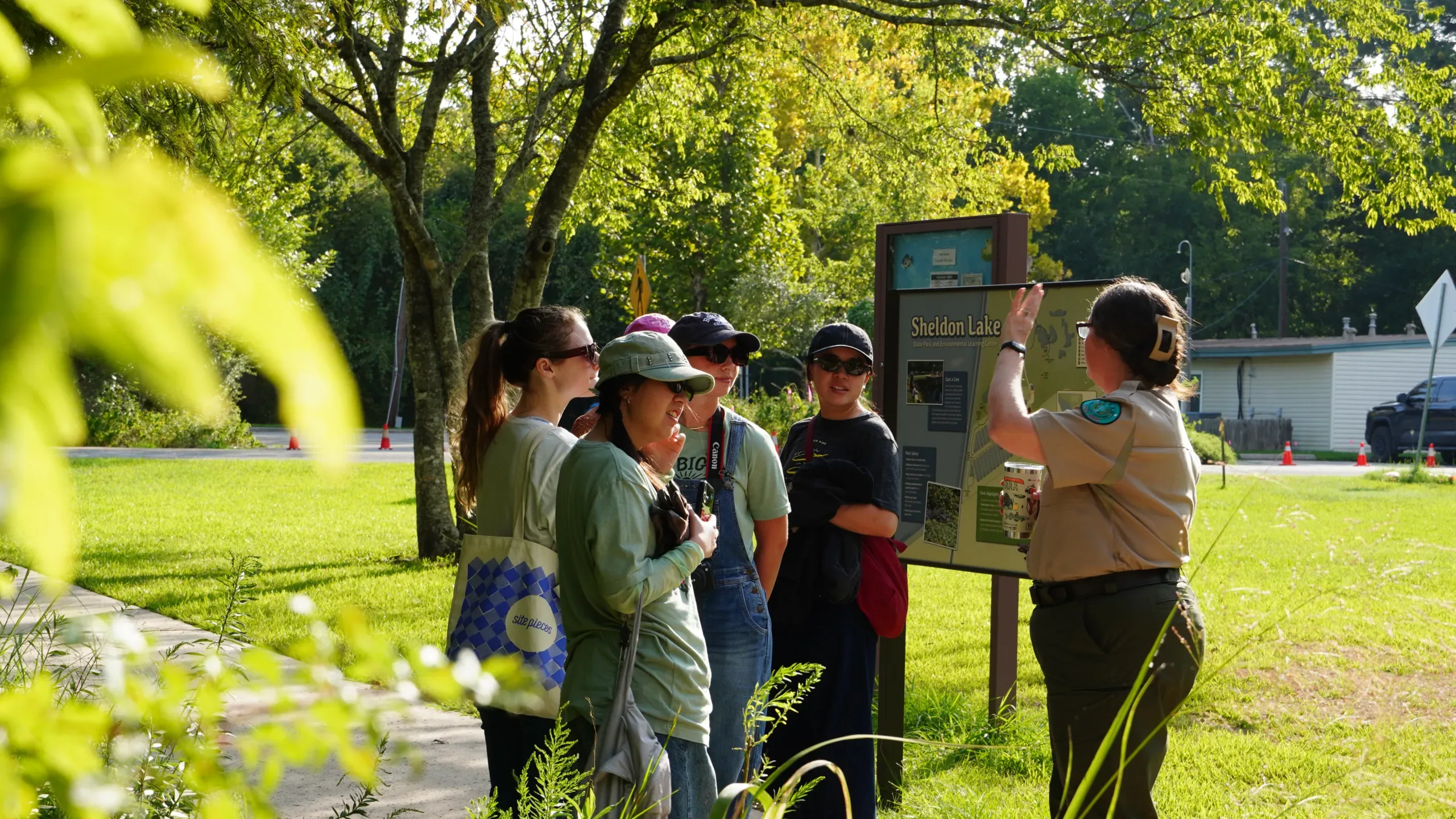
The Big Give brought TBG teams together across Texas to restore habitat, strengthen community spaces, and support organizations rooted in environmental education and care. From planting resilient landscapes to clearing invasive species, each office applied its skills to local needs while advancing a shared commitment to service.


Each year, our goals become loftier and partnerships deepen. While TBG’s specialties span landscape architecture, planning, urban design and branded environments, a common trait is that we are doers. That mindset means looking beyond the immediate task, for example, not only painting a shed with a new mural, but also re-leveling it and removing rotten boards so the improvement lasts.
Across all offices, The Big Give 2026 shared a common purpose: helping communities restore places shaped by environmental damage, displacement, or changing ecological conditions. Teams supported Sheldon Lake State Park & Environmental Learning Center, Posada Esperanza, the Trinity River Audubon Center, and the San Antonio Botanical Garden.
Austin — Posada Esperanza
In Austin, our team traveled a few miles north to Posada Esperanza, a Casa Marianella program serving displaced immigrant mothers and children. Founded in 2003 by AmeriCorps volunteer Patti McCabe, Posada Esperanza grew from a single East Austin home into a four-house campus offering shelter, trauma-informed case management, language classes, and youth advocacy. Its work builds on Casa Marianella’s service to displaced immigrants and asylum seekers since 1986.
Our team applied landscape architecture principles to create a more restorative campus environment. By improving drainage, clearing overgrown areas, enhancing entrances, and installing resilient native plants, the Austin team helped shape both welcoming and healing environments.


Dallas — Trinity River Audubon Center
The Dallas team spent the day at the Trinity River Audubon Center, an environmental oasis with a history rooted in environmental justice. Once a gravel quarry, the 120-acre property became the Deepwood Landfill, the largest illegal dump in Texas history. For more than 20 years, nearly 1.5 million tons of hazardous industrial refuse accumulated beside nearby communities, culminating in an underground fire that burned for 52 days in 1997.
Following the landmark Cox v. City of Dallas decision, the site underwent extensive remediation and reopened in 2008 as the gateway to the 6,000-acre Great Trinity Forest.
TBG Dallas removed invasive Chinese privet and Johnson grass, tended native Blackland Prairie restorations, and joined naturalists to explore urban design strategies that protect birds along the Central Flyway.


Houston — Sheldon Lake State Park & Environmental Learning Center
In Houston, teams gathered at Sheldon Lake State Park & Environmental Learning Center, where former industrial infrastructure has been reclaimed as wetlands, prairie, and wildlife habitat. Built in 1942 to supply freshwater to wartime refineries and the Houston Ship Channel, the 2,700-acre reservoir later became a waterfowl refuge, fish hatchery, and, in 1984, a state park. Today, Sheldon Lake is known for habitat restoration and connecting urban communities with nature.
In 1998, park staff launched an environmental education pilot. Educator Angie Nobles brought students from Travis Elementary, who named one of the first baby alligators released there “Travis.” The park has since become known for hands-on, TEKS-aligned programming for Houston youth.
Our Houston team joined Park Rangers Kelley, Dylan, and Tori to seed and clear trails and create nature-themed event boards for community programming and outdoor classrooms, supporting the park’s mission of accessibility, education, and engagement.


San Antonio — San Antonio Botanical Garden
TBG San Antonio joined forces with the San Antonio Botanical Garden, an institution built atop an abandoned limestone quarry. The property was originally home to the Brackenridge Waterworks in 1877, when water was pumped uphill through Mahncke Park from the San Antonio River to create a 5,000,000-gallon reservoir (which today is the Botanical Garden’s hilltop amphitheater). Renowned for Emilio Ambasz’s subterranean Lucile Halsell Conservatory and the historic 1896 Sullivan Carriage House, the garden currently leads regional post-flood riparian restoration. Propagating riverfront native species such as bald cypress and sycamore, the garden helps fortify eroded waterways throughout Central Texas. The San Antonio studio, carrying forward meaningful site legacy, divided their time between repotting Spikerush grasses for stabilizing stream banks and repotting and pruning tree specimens in preparation for the fall planting season.


Reflecting on the Impact
Whether helping build a peaceful sanctuary for families in Austin, caring for vital wetlands in Houston, tending restored prairie in Dallas, or helping young trees take root in San Antonio, this day reminded us of a simple truth:
Healing broken ground begins with human connection. The dirt under our fingernails is an enduring reminder that the best spaces are shaped with deep empathy—and that care is something we carry into every community and project we touch across Texas.