Reimagining Stormwater Spaces as Living Parks
11.10.26
- Design
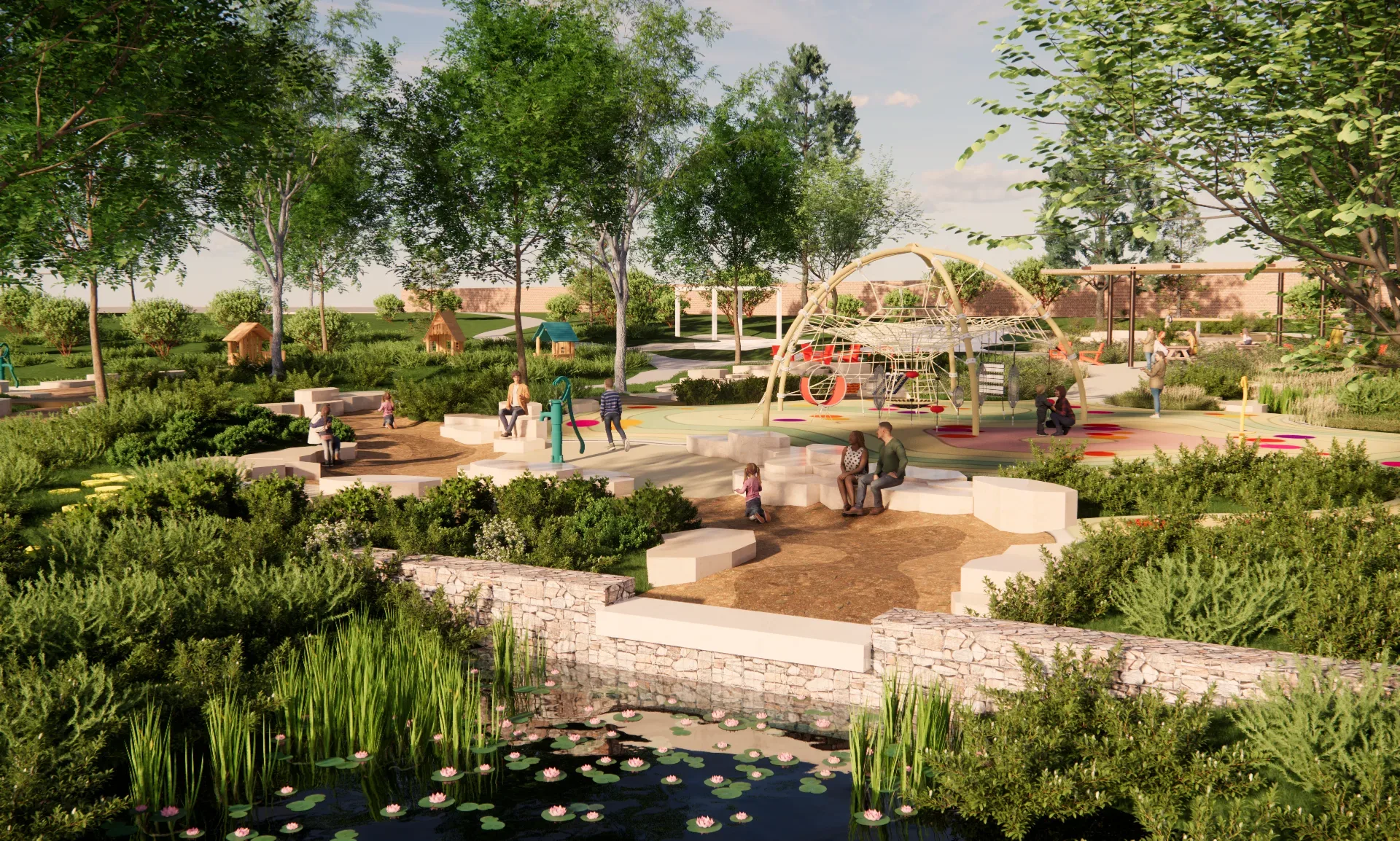
This idea is based on a presentation given at NRPA 2026 by TBG’s Meade Mitchell, PLA. It highlights three Texas projects and, most importantly, explores how the same approaches can be replicated in any community.
Every community has them: the detention pond tucked behind a neighborhood, the drainage corridor fenced off along a roadway, the leftover parcel no one quite knows what to do with.
These spaces are usually treated as must-have infrastructure. They are designed to do one job. But they don’t have to stay that way. With thoughtful landscape design, a strong ecological foundation, and a plan for long-term stewardship, stormwater facilities and leftover land can become community-loved destinations: places that invite nature in, inspire play, and bring people together.
Utilitarian spaces and leftover parcels are easy to overlook. They are often seen as a maintenance burden or a regulatory checkbox rather than an opportunity, and many communities are simply unsure what to do with them.
The shift starts with a change in mindset. Instead of asking, “How do we meet the requirement?” we can ask, “How can this space work harder for people and for nature?” When a site is designed as a multifunctional landscape rather than single-purpose infrastructure, it can manage water and also support habitat, build resilience, and offer a place to gather and play.
Three goals guide this approach –
Invite nature in. Create habitat and ecological value where there was little before.
Inspire play. Give people of all ages a reason to explore and spend time outdoors.
Bring people together. Make the space a shared destination for the surrounding community.
Three Texas Projects That Made It Happen
Riverstone Wetland Park, Little Villa Wetland Park, and Creekside Park each took a leftover or utilitarian space and transformed it into a multifunctional landscape supporting habitat, resilience, and recreation.
Here is a closer look at each –
Riverstone Wetland Park
Riverstone Wetland Park connects visitors to nature in ways that inspire play — and getting a little dirty. Created from a parcel of flat land in partnership with a biologist, Wetlands Park is now a rich ecosystem with rolling topography, thriving aquatic plants, bald cypress domes, interactive features, and birds, fish and frogs. Engaging elements include a mud pie kitchen, targets in the pond for stone skipping, rock pathways, trails, and interpretive signage with magnifying glasses. This atypical park speaks to the authenticity of place while fulfilling requirements to replace wetlands lost to development.


Little Villa Wetland Park
Phase I:
In 2010, Little Villa Wetland Park design began with the Mission Bend M.U.D. No. 2’s vision of increasing community access to recreation facilities and appreciation of Texas wetlands by converting a 14-acre District detention basin into a community park. Little Villa Wetland Park is surrounded by dense commercial and residential land uses. While still maintaining the required detention needs for the District, the Park includes a small lake, Texas wildflower meadows, wetland plantings, lawn areas, concrete trails, lighting, nature overlooks, seating areas, an amphitheater, and memorial plaza.
Phase II:
Building on the success of Phase 1 completion in 2014, TBG is developing Phase 2 that will increase, stormwater capacity, enhance wetland edge habitat, and introduce additional recreation and community programming. New park features include a 34,000sf nature-based all-abilities playground with water play zone, shaded seating areas, event lawn and pavilion, outdoor classroom, and a “Living Museum” that highlights the native flora and fauna of the three local ecoregions surrounding Houston. The trail system will be expanded to create a robust range of active and passive experiences; exercise, strolling, and moments of rest and reflection. A custom timber bird blind will allow families to view and record migration patterns throughout the year.


Creekside Park
Creekside Park transforms 17.7 acres of underused, unprogrammed land into a flagship public park and community center for Lakemont. The project fills amenity gaps that emerged as the established community grew and changed, replacing a limited open space with a connected landscape for gathering, recreation, nature play, and environmental performance.
The park now includes a clubhouse with a shared lobby, lounge, event rooms, and offices; multi-use fields; basketball and pickleball courts; outdoor fitness; flexible lawns; swings and seesaws; a playground; and a splash pad. These complementary spaces support league practices, community events, exercise, birthday parties, informal games, playdates, and everyday relaxation.
The Life Cycle of the Bayou gives the park a distinctive identity. Children discover alligator eggs in sand, move beneath cattail-like arches, follow fish across the play surface, and encounter sculptural egrets standing watch. The alligator’s planted body becomes the landscape itself: children climb its leg using log climbers, travel across its back, and slide down its side into the bayou-inspired play area. Familiar and nature-based play elements offer different levels of physical and sensory challenge.
Natural wood, stone, planting, landform, and open sightlines help the colorful contemporary play environment relate to Lakemont’s established character. Fields and lawns incorporated into dry detention areas further expand the park’s usefulness, allowing infrastructure land to become part of daily community life.


How to Replicate This in Any Community
The best news is that this approach isn’t limited to a few special sites. The same principles can be applied almost anywhere a stormwater facility or leftover parcel is waiting for a second life:
Lead with landscape design. Shape stormwater facilities into inviting, usable places rather than fenced-off utilities.
Build on ecology. Bring in habitat and native systems that let nature thrive and make the space more resilient.
Plan for long-term stewardship. Think about maintenance and ongoing community care from the start, so the park stays healthy for years to come.
Bring stakeholders along. Use clear examples and talking points to build support among decision-makers, neighbors, and partners.

Your Leftover Land Is an Opportunity
Infrastructure doesn’t have to be something a community simply puts up with. As Riverstone Wetland Park, Little Villa Wetland Park, and Creekside Park demonstrate, it can be a living, resilient park that people genuinely love.
The next time you pass a retention pond, a drainage easement, or an unused parcel, try looking at it with fresh eyes. What could it become? If you’re ready to explore that question for your own community, connect with the team at TBG to start the conversation.