Cultivating Creativity: Inspiring Insights from TBG’s Summer Retreat
09.09.25
culture
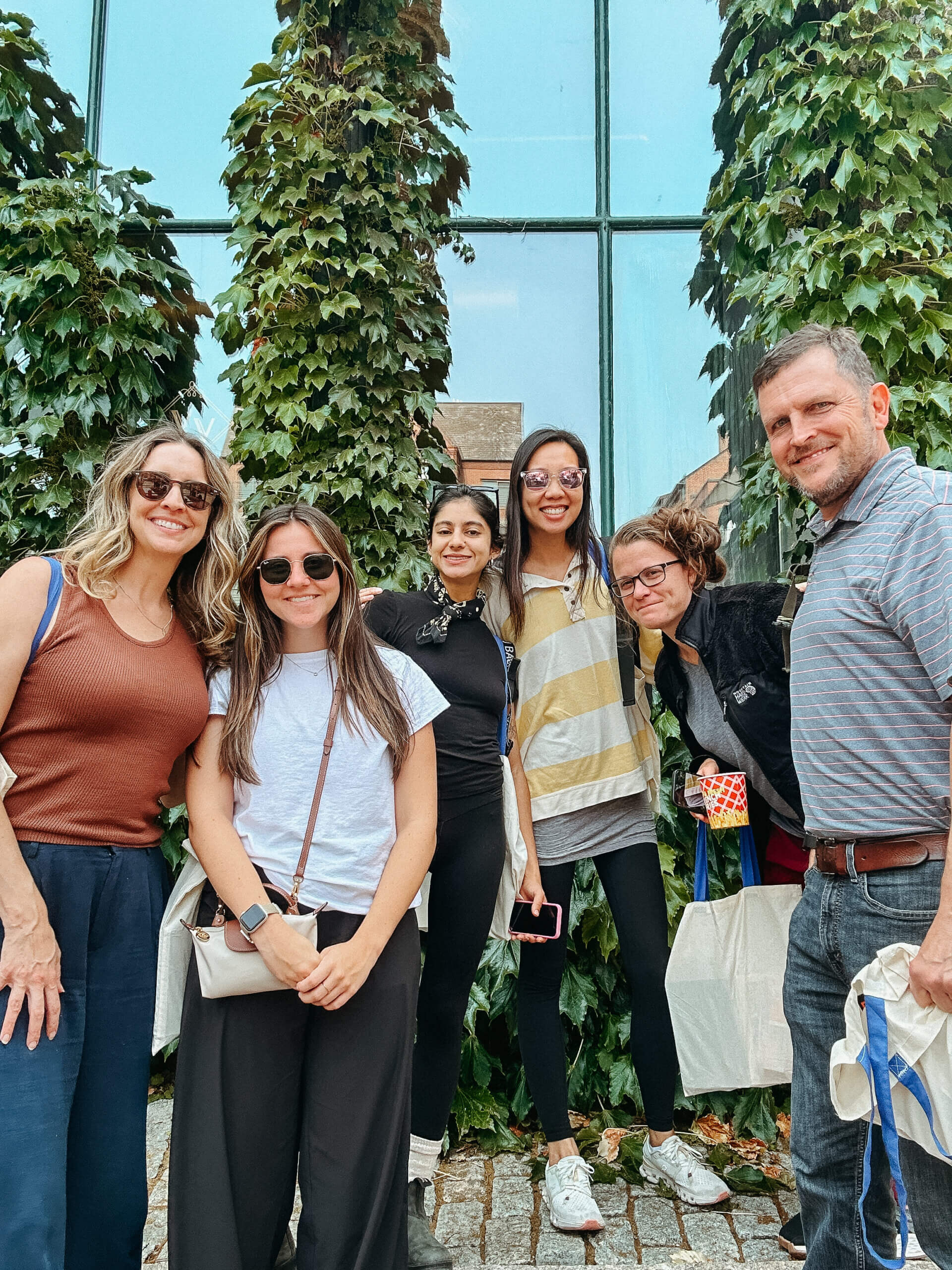
Under the shadow of New Hampshire’s White Mountains National Park, four TBG designers and two facilitators pressed pause on deadlines and meetings to sketch, hike, laugh, and reconnect with creativity. For the third year of our Summer Creative Retreat, the destination was New England. The goal, as always, was the same: step away from the rush of practice to rediscover the joy of creative exploration and process.
The retreat, which has become an integral part of TBG’s culture and strategic plan to prioritize design excellence and creative thinking, focuses on discovery and slowing down to observe and understand the vernacular of place through active exploration and reawakening the natural rhythms of creativity. From traveling to the retreat destination, to excursions and activities, all are carefully structured over six days. The agenda and curriculum are intended to push retreaters towards discovering this new place, documenting their impressions along the way through various mediums, and wrapping up the week with presentations to TBG President, Bill Odle.
Much thought and intentionality goes into selecting the retreat destination. More than an environment that differs from the diverse ecological and cultural regions across our home state of Texas, the Summer Creative Retreat location must be awe-inspiring and rich in art, history, culture and natural beauty. From the lush green forests and rocky shores of Wisconsin’s Door County, a slender limestone peninsula that extends into Lake Michigan, to the pueblo-style architecture and pastel desert hues of Santa Fe, New Mexico, this year’s retreat to the White Mountains region of New Hampshire offered an immersive, multi-sensory environment for creativity to flourish. Led by TBG Principal & Design Director, Nicole Warns, planning the Summer Creative Retreat begins six months in advance of the trip. Described as “beautifully controlled chaos,” Nicole starts with a Miro board, capturing every idea, and mapping out every detail and the “why” behind it. Afterall, that’s the whole point – embracing the creative process.
The application process opens in early June, inviting all practicing designers across the firm to apply. The application itself is simple but purposeful, with two short reflections. Applicants share how they envision the retreat’s sessions and excursions advancing their personal or professional practice, and what takeaway they most hope to gain from the experience. While the prompts may only ask for 250 words, the responses reveal much: aspirations, curiosities, and even areas of burnout that might benefit from time away.
From this firmwide pool of applicants, four designers were selected for 2025: Megan Lowry, Jessie Jacobs, Rainie Madsen, and Luiza Mola Curi. Guiding them were facilitators Nicole Warns, Principal & Design Director, and Meade Mitchell, Principal in Houston. The selection process is deliberate and layered, considering not only the written responses but also diversity in backgrounds, office locations, and career stages. The goal isn’t simply to choose a group, but to curate an experience that is both personally meaningful and reflective of the firm as a whole.
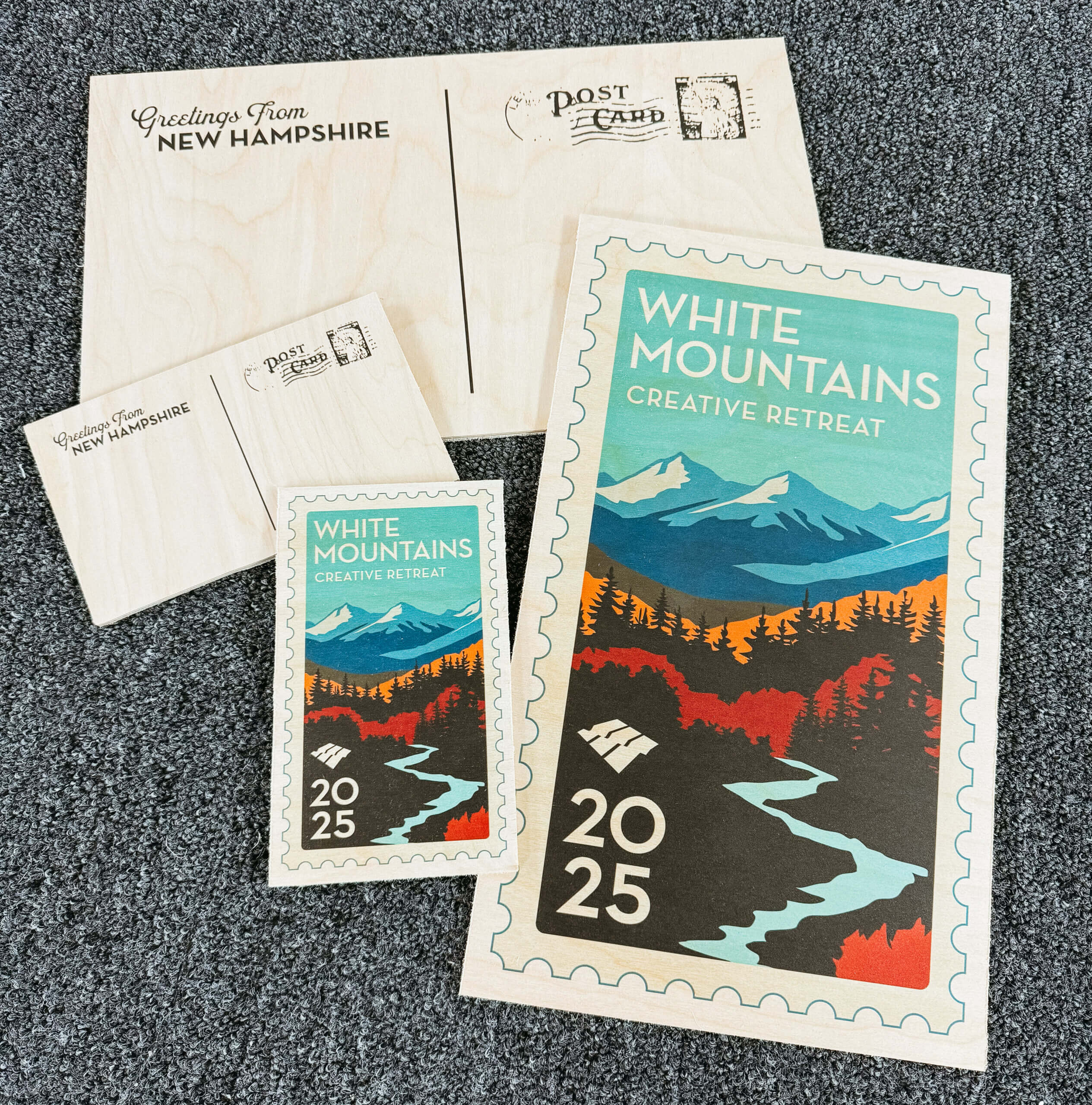
The retreat began in Portland, Maine, where the group’s first impressions were shaped by the city’s waterfront character – lobster rolls along cobbled streets, seagulls circling the pier, and winds rolling off the Atlantic at the nation’s oldest lighthouse. Soon after, they crossed into New Hampshire’s White Mountains where their deeper exploration began. Waiting for each participant was a custom Summer Creative Retreat tote stocked with creative tools including sketchbooks, watercolors, pencils, and a hand-crafted accordion notebook to fill page by page throughout the week. A woodcut stamp, designed by Principal Jeff Raudabaugh in collaboration with the Branded Environments team, served as a personal mark for the thoughtful journey ahead.
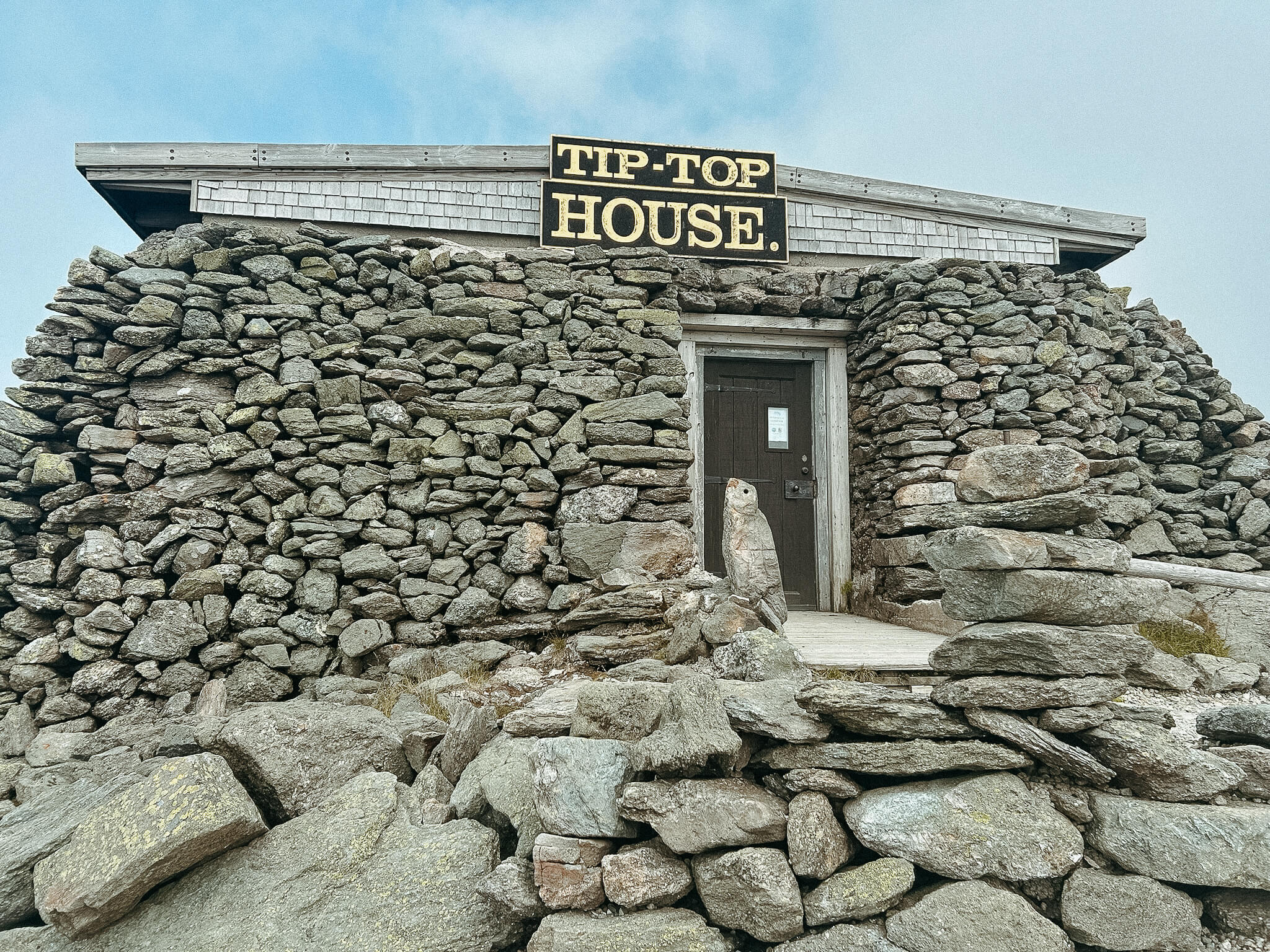
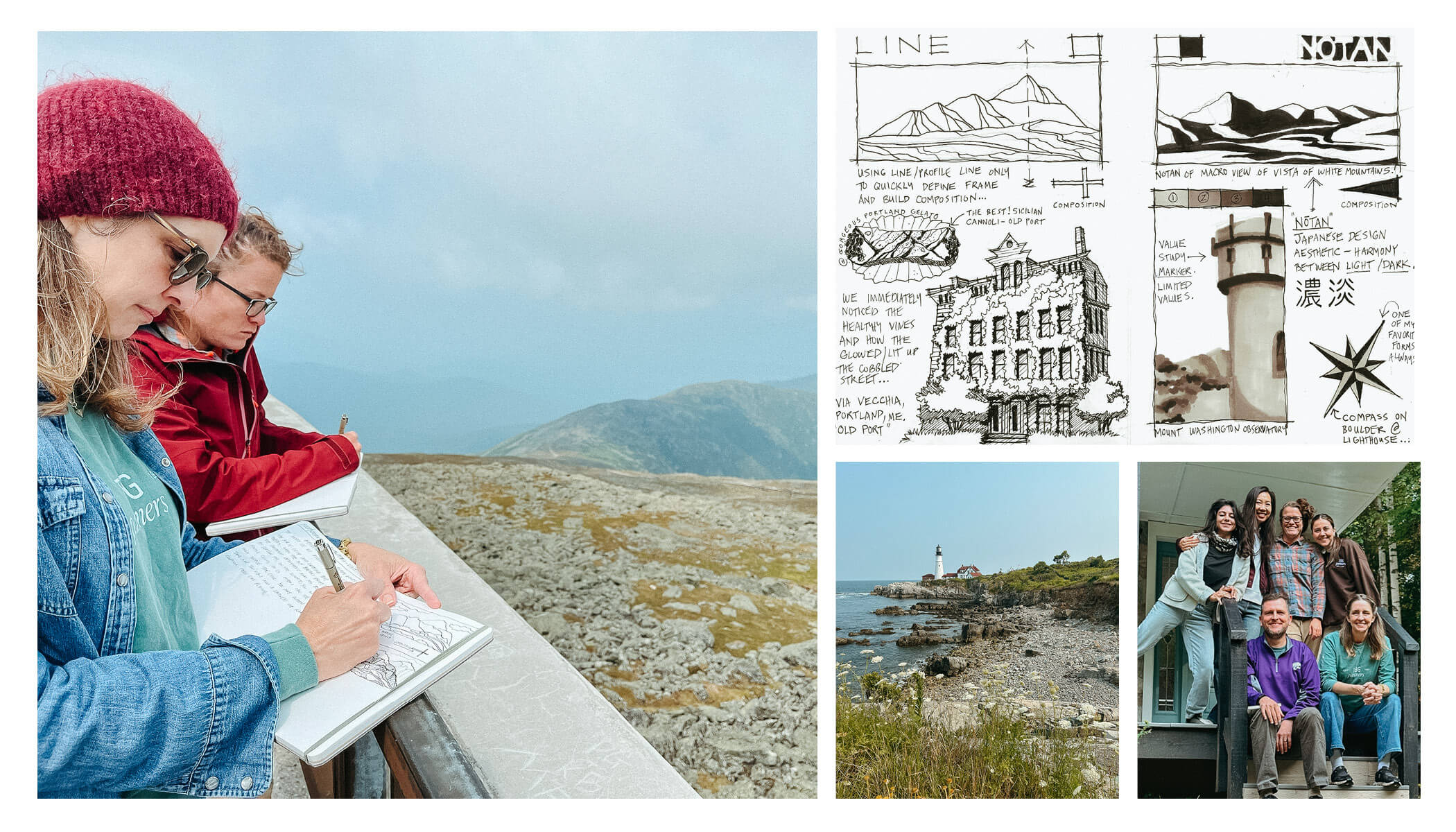
The week naturally moved from the expansive to the detailed beginning with sweeping views from the summit of Mount Washington, the highest peak in the northeast at 6,288 feet, then taking in the quieter details of the forest below and eventually turning toward the human scale of craft and collaboration.
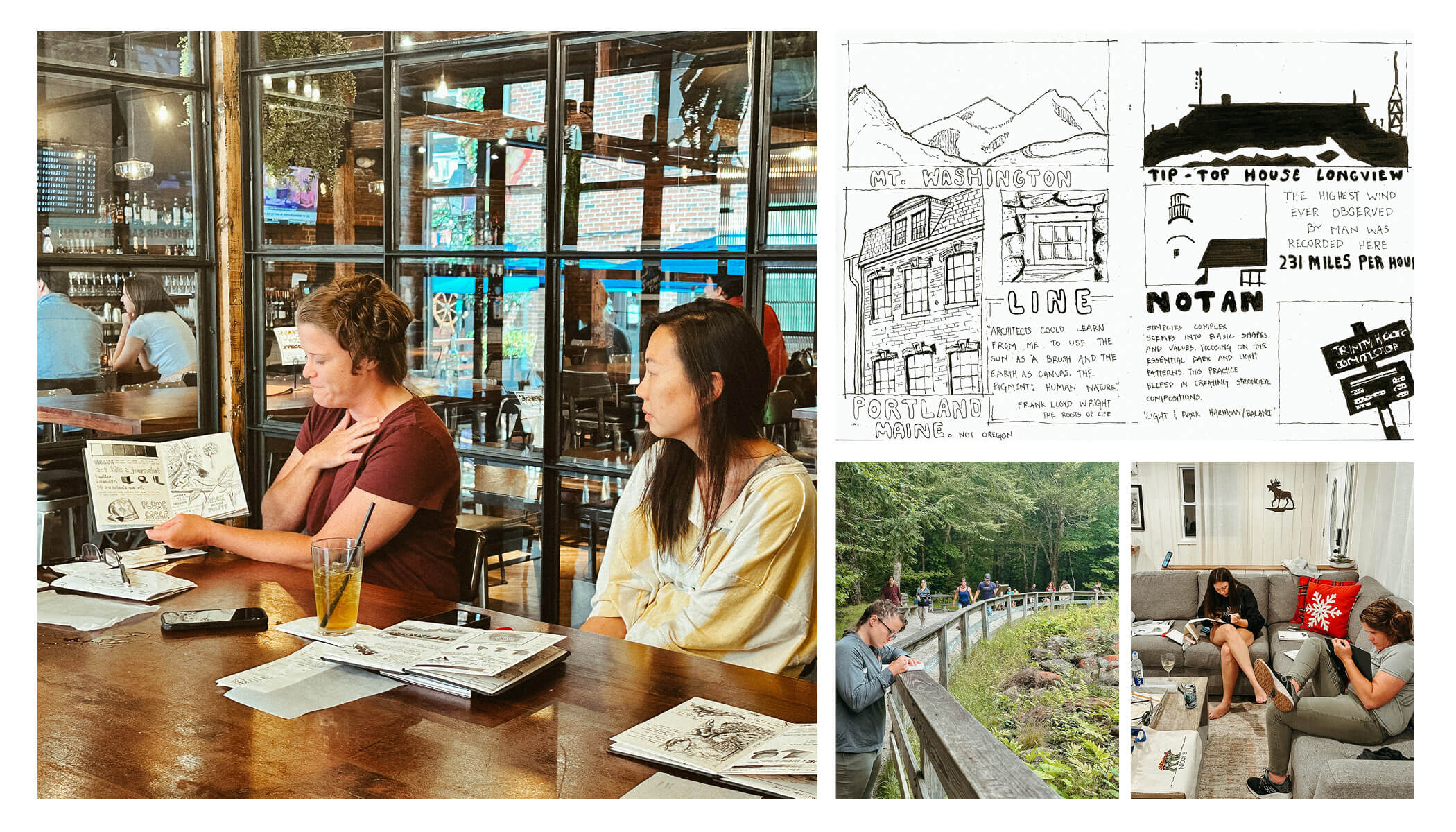
At the Mount Washington Observatory, retreaters were asked to focus on composition and restraint. With a few simple ink lines, they translated the enormity of the surrounding peaks into pared-down sketches. Back in the cabin studio, this exercise shifted into an exploration of Notan, the Japanese principle of balancing composition using light and dark forms. By reducing complex vistas into elemental shapes, participants practiced seeing structures where detail might otherwise overwhelm.
Each day carried a rhythm – a morning conversation over coffee to set the focus, an excursion to absorb a new environment, and an evening studio session to reflect and translate those impressions onto paper. The sequence encouraged a balance of movement and stillness, observation and making, nudging participants to look closer, notice more, and embrace process rather than outcome.
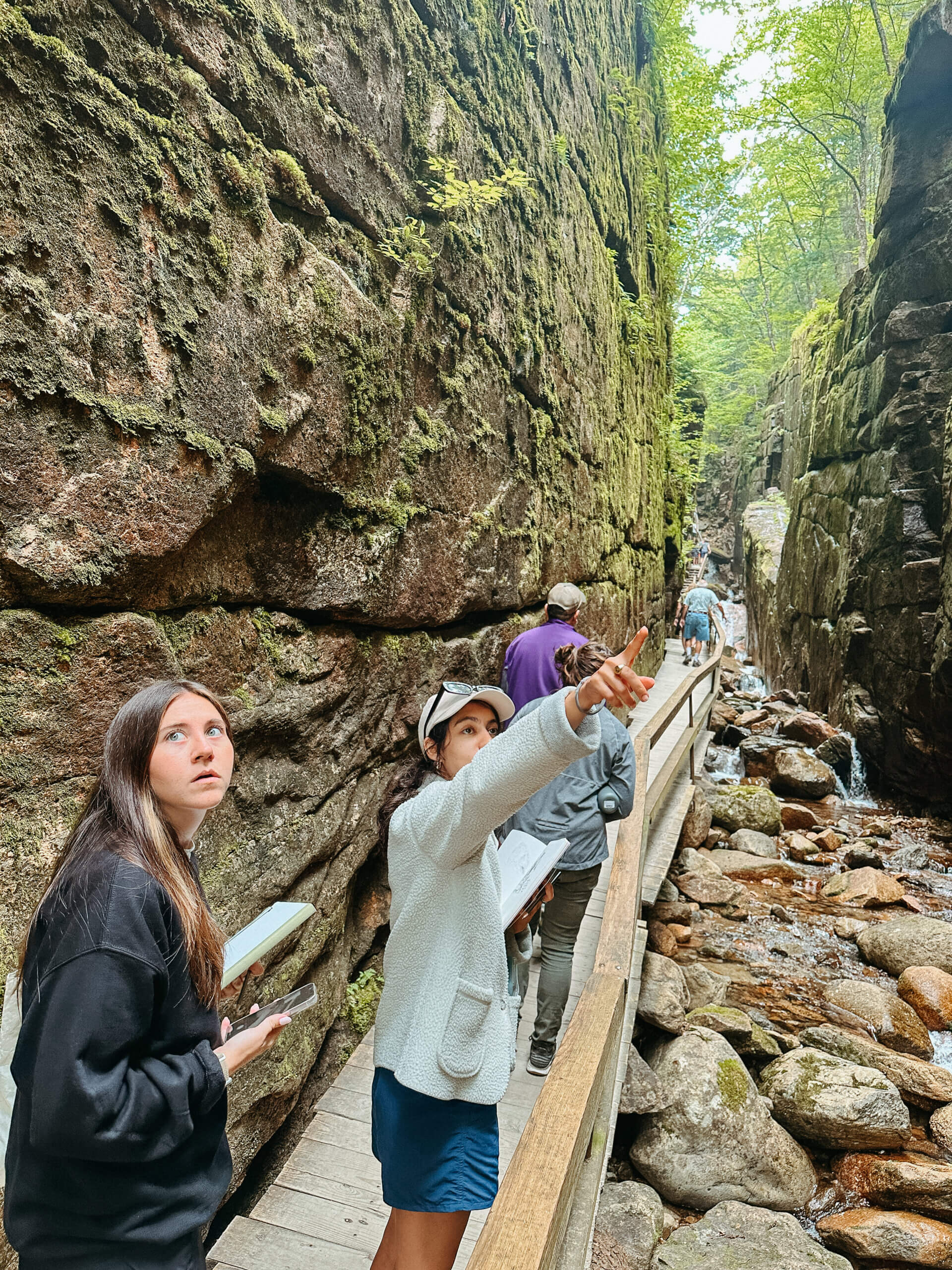
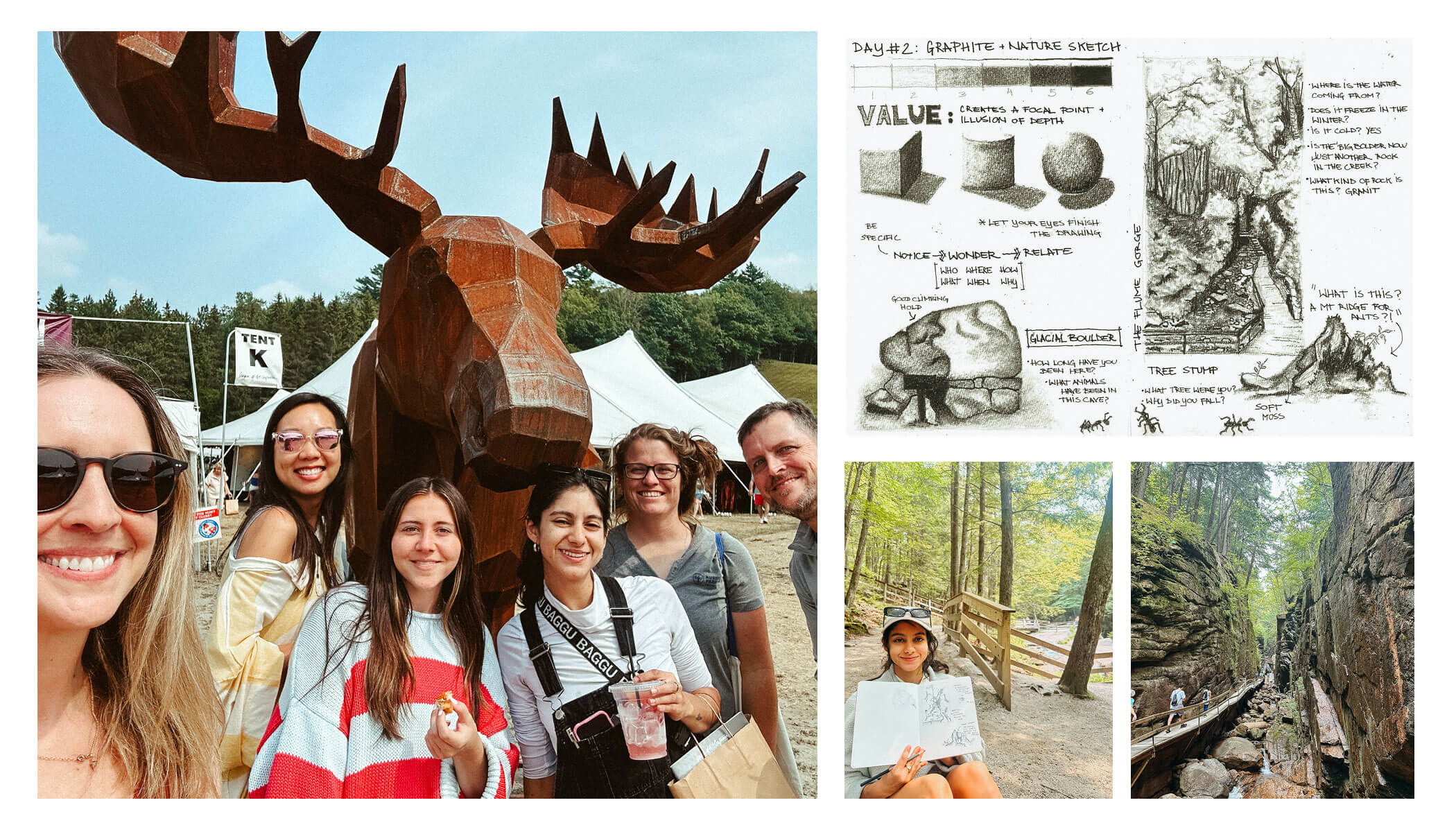
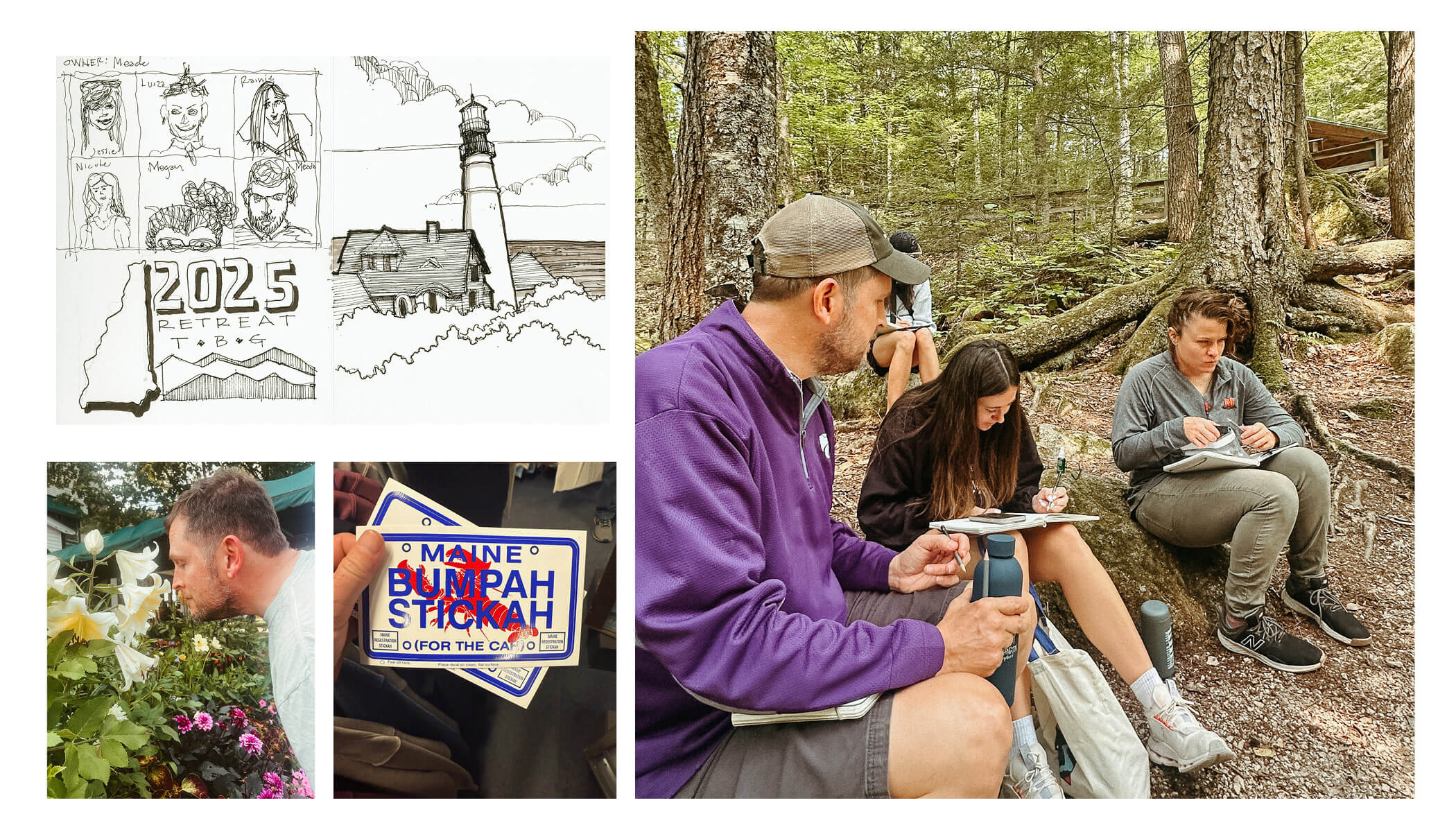
The group journeyed to the famous Flume Gorge. Traversing the 2-mile loop trail through the gorge with towering granite walls, moss-covered boulders and cascading waterfalls, retreaters used pencil and value studies to draw not only the expansive, awe-inspiring natural scenes in front of them, but also the often-overlooked details that make it special. Nicole and Meade emphasized the principles of nature journaling, pushing attendees to remark on what they 1) noticed, 2) wondered, and 3) were reminded of as they sketched various subjects throughout the gorge and surrounding forest.
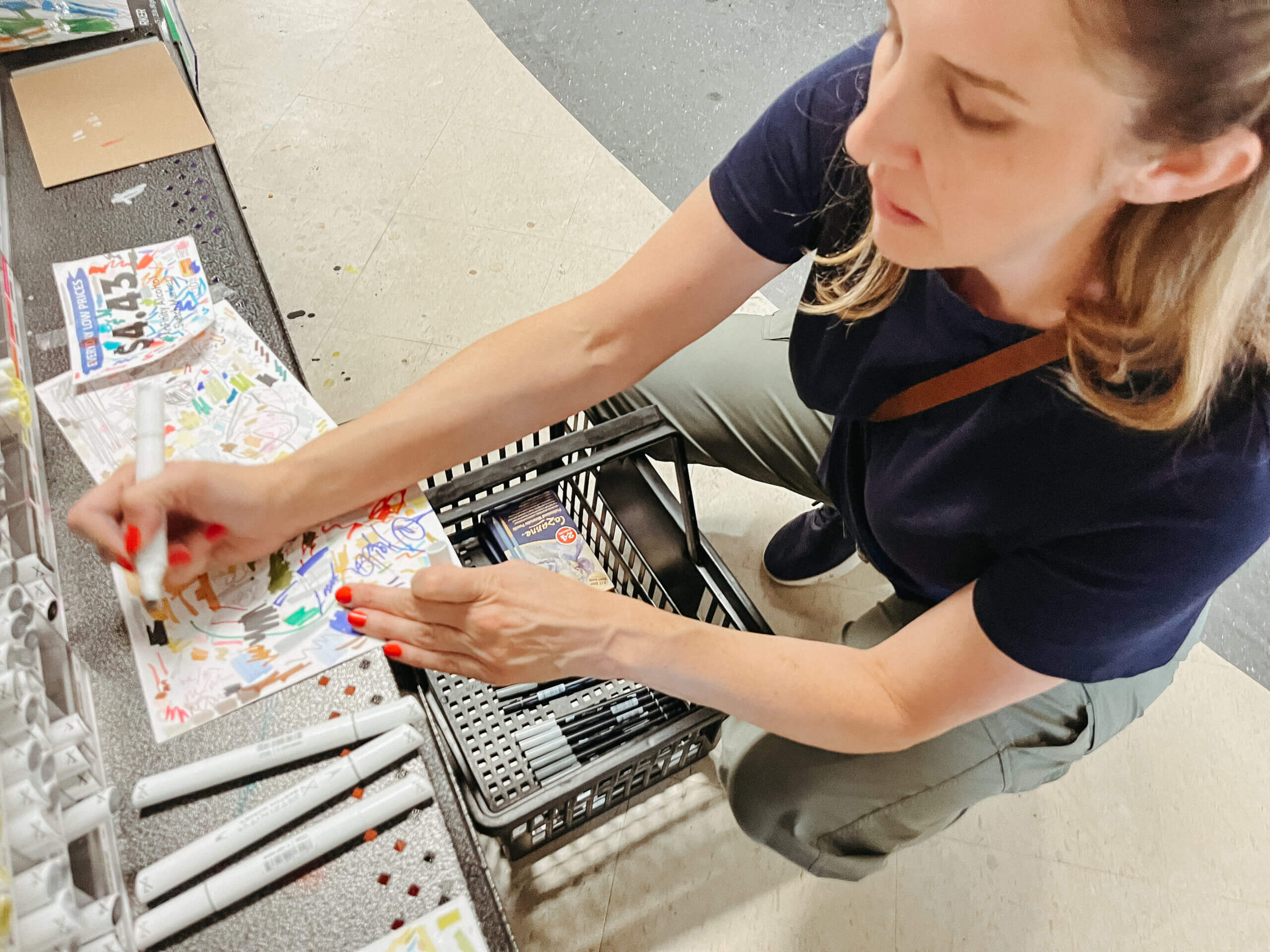
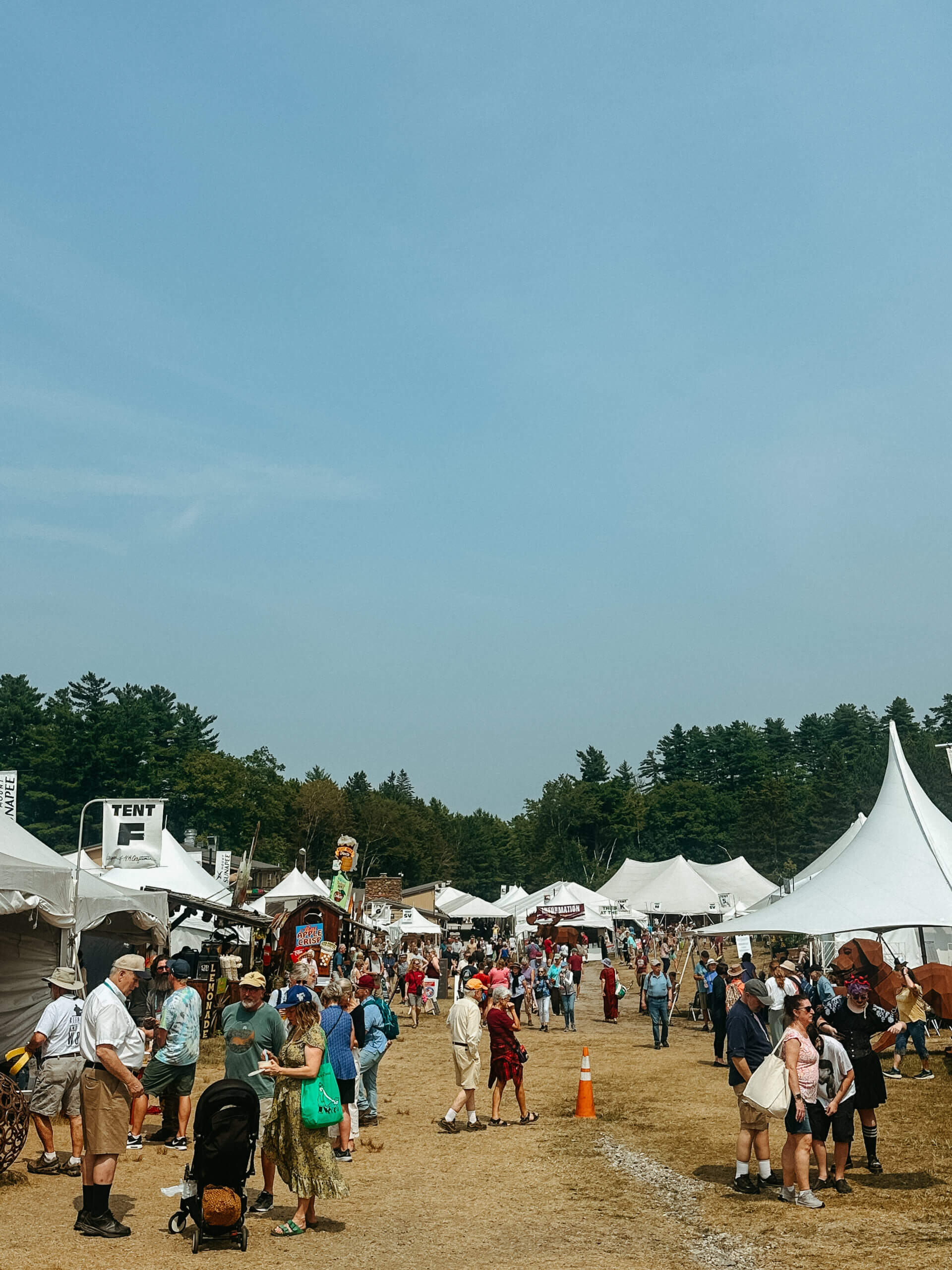
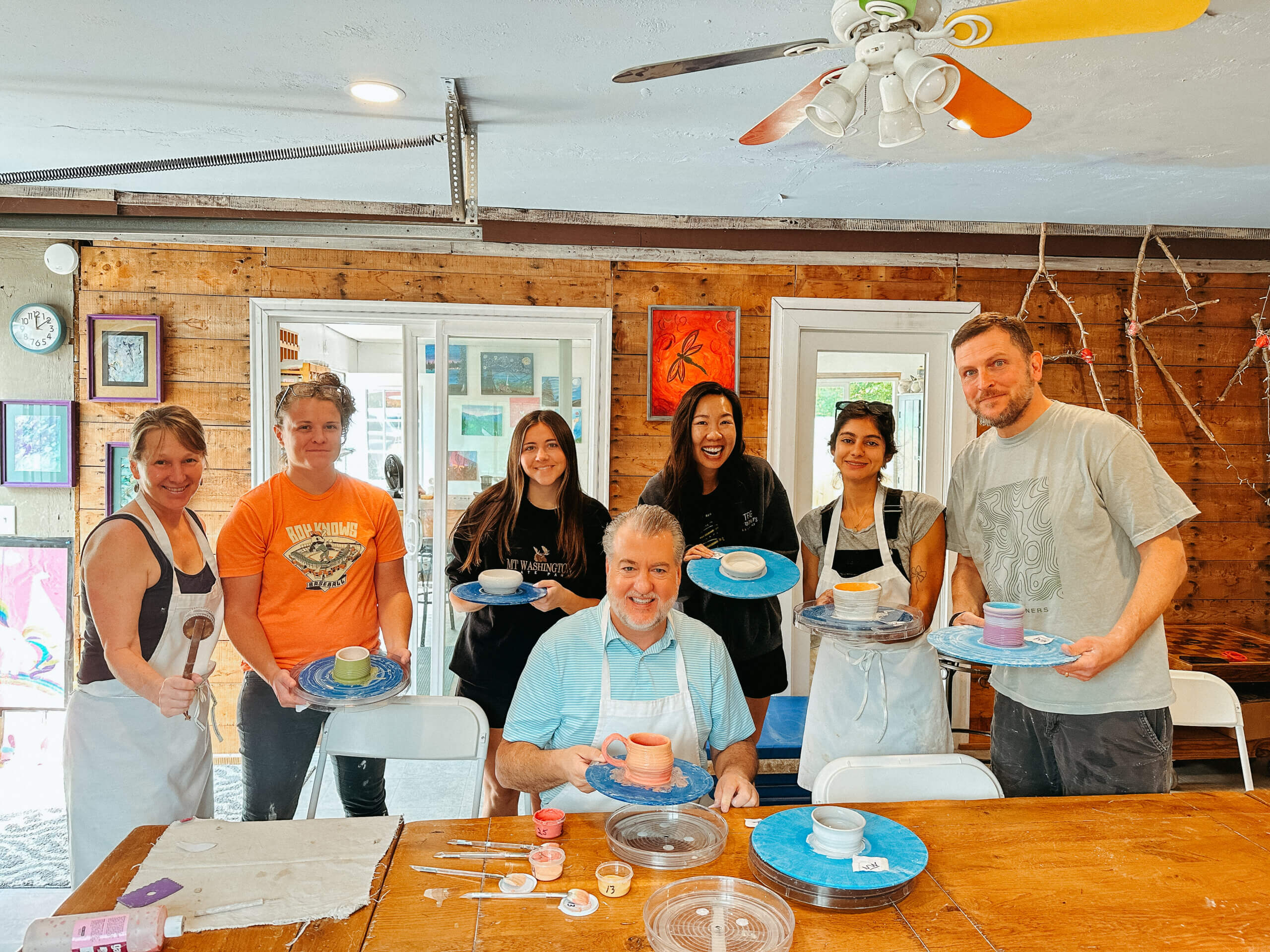
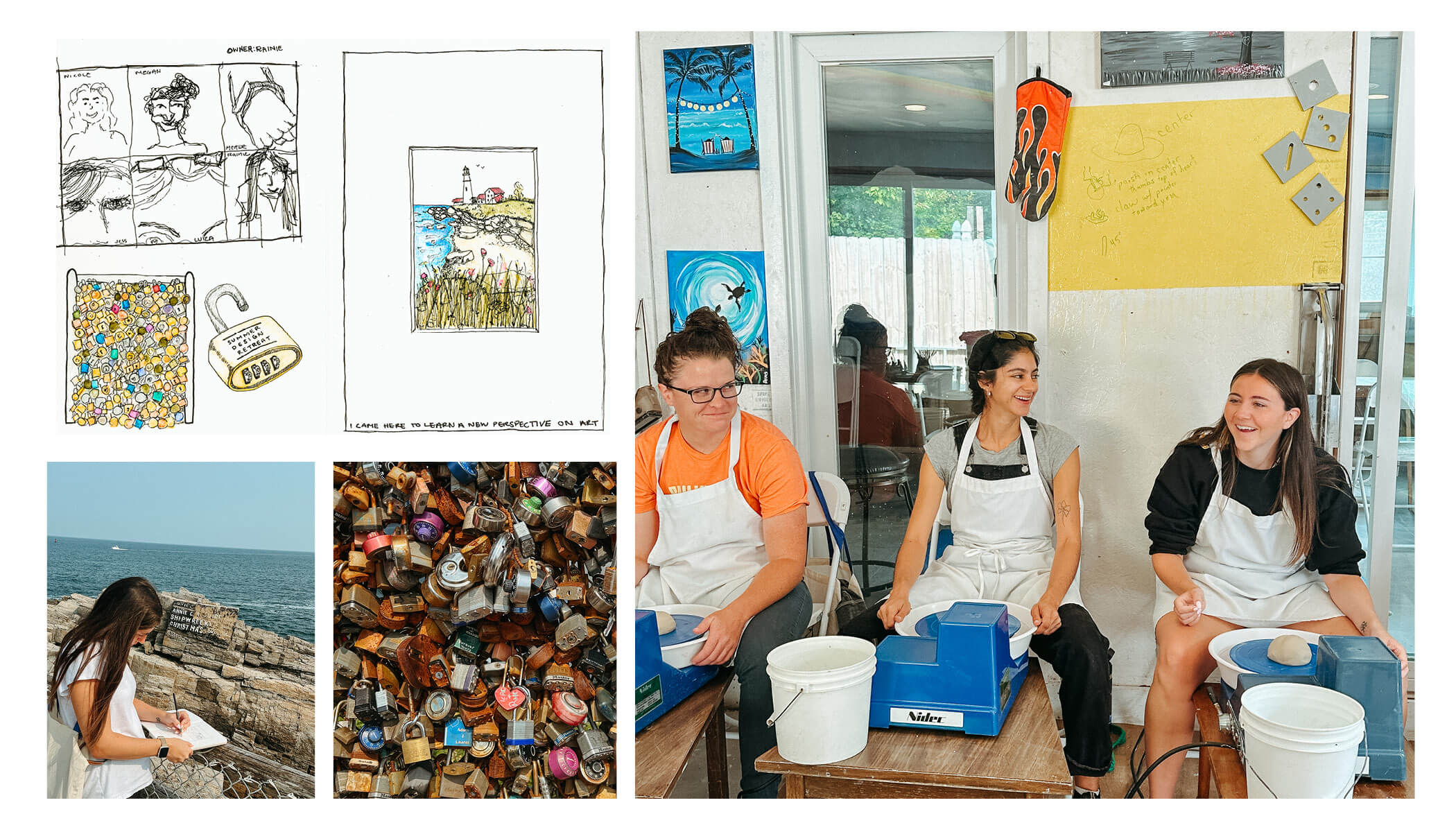
To round out the retreat experience with a sense of local culture, the group explored color theory and craft at the New Hampshire League of Craftsmen Fair. There, they sketched in watercolor pencil and spoke with artisans about their processes, translating conversations into small thumbnail drawings that captured each step. The week closed with a hands-on pottery class at Fired on the Mountain, a local studio. Throwing clay proved to be a fitting finale – an exercise in slowing down, focusing on fundamentals, trusting the process, and giving creativity room to surface.
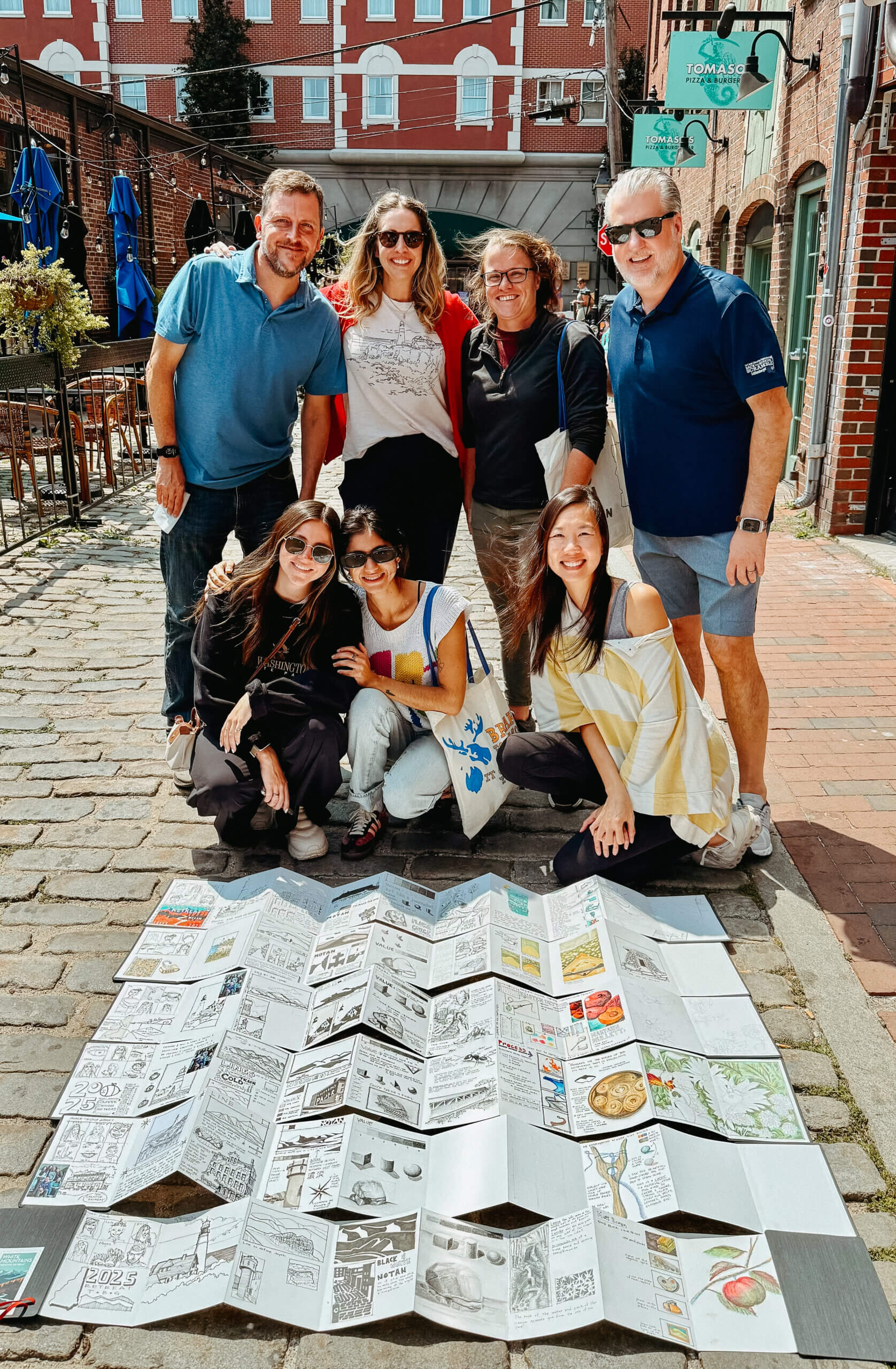
The 2025 Summer Creative Retreat wrapped up with a final gathering including delicious lobster rolls at Rigby Yard, a lively spot on Wharf Street in Portland’s historic train depot. Here, each participant shared their journey with Bill Odle, unfolding their accordion sketchbooks. Page by page, they revealed their personalized creative stories from the week – landscapes in ink, forest details in pencil, color studies, and personal reflections. It was a collective showcase of how they explored place, process, and design.
This final presentation is a key part of the retreat. It’s a chance to practice the same skills we use with clients every day: clear communication, confident storytelling, and the ability to share creative work. Presenting these personal explorations to Bill underscores the rigor and accountability that shape our work while honing the very skills that lead to design understanding and positive client experiences.
Ultimately, the Summer Creative Retreat is a direct investment in TBG’s creative culture. It is a space for designers to recharge, deepen their craft, and explore new ideas. These experiences flow directly back into our daily work, making our teams stronger, our ideas sharper, and our client outcomes more impactful.
We invited each attendee to share a memorable experience from the retreat..
Luiza’s – One of her favorite experiences was the League of New Hampshire Crafts Fair. When she arrived, “Love Story” by Taylor Swift was playing, and she immediately felt immersed in everyone’s craft. She was captivated by the artistry on display, and the fair’s location at the base of a ski area made the surroundings equally beautiful. She also loved the walk to Flume Gorge State Park and hearing what each person was noticing along the way. Beyond the sights, she cherished the conversations and the sheer amount of giggling. They laughed so much that her stomach hurt. There was a lightness to the week that’s hard to put into words, but if she had to describe it: pure joy shared between others.
Jessie’s – Being in the studio and working with the team helps her stay connected to creativity, even if her current role doesn’t immerse her in that headspace every day. She finds joy in planting creative seeds and seeing them take root over time and hopes to reinforce this spirit within TBG’s culture. Even before the retreat, she supported Meade with Intern Design Sprints focused on storytelling, recognizing how much those moments helped refuel her. The retreat amplified that energy, and she’s excited to carry the tools and insights forward. Regular check-ins with Meade have centered on building storytelling into the culture, with hopes it could grow into something exponential. Above all, she believes positivity is contagious, if you can hold onto it, the harder parts of the job become easier to manage.

Megan’s – The experience was hard for her to put into words. It was more fulfilling than she had expected and exceeded all her expectations. She had been looking forward to getting out of the office, slowing down, and immersing herself back into the craft of landscape architecture and design. She enjoyed dropping into low gear, reconnecting with nature, and feeling fully present.
Rainie’s – She loved that each participant attended the retreat for their own reasons. Her application focused on the fact that activities like these are generally a weakness for her and that she wanted to push herself out of her comfort zone. Getting selected was initially a shock, and she even felt a bit of buyer’s remorse, wondering what she had gotten herself into. As the retreat progressed, it turned out to be everything she hoped for and more, coming full circle. She was so glad she had pushed herself to step outside her comfort zone. One thing she hopes to carry back into her work is the confidence she gained, not getting too hung up on details, but instead encouraging others in their practice and reminding them to simply put pen to paper.
Nicole’s – She has noticed a consistent pattern in retreats: by Day 3, walls come down. The brain has had time to decompress, and the nervous system has settled. On this retreat, not only were the walls down by Day 3, but attendees were energized and choosing to stay up working until 1 a.m. The first two days were for settling in and by the third day, everyone was relaxed, engaged, and ready to fully participate. Looking ahead, Nicole hopes the retreat continues to reinspire principals, extinguish burnout, and provide opportunities to teach and encourage others. Initially, the impact may be individual, as everyone has different roles and personalities, but for senior associates, she hopes it encourages slowing down, sketching on site, and embracing the theory of “landing,” inspiring them to motivate and support their teams.
Meade’s – One word that came to mind to describe the retreat was connected. The “wondering and noticing” activity reminded him of pre-technology ways of generating ideas, and he appreciated the emotional dimension of wanting to get things right alongside his peers. The retreat came at an interesting time in his career, as his role was shifting to be more people focused. After thirty-five years of doing design, he no longer has projects attached to him as a Practice Lead. The experience gave him space to reflect on how to help people be the best they can be, thinking of people as projects, in the most human way, and how to motivate them effectively.
Bill’s – We took a different approach with this retreat. Many firms use design retreats to focus strictly on project work or pro-bono efforts, which are valuable, but very different. This retreat intentionally stepped away from day-to-day project demands while keeping a creative lens. At its core, it reflects our belief that a firm’s greatest asset is its people. If we’re not investing in them, we’ve lost the very reason we’re in business. For me, it’s a no-brainer…the return far outweighs the investment.
